
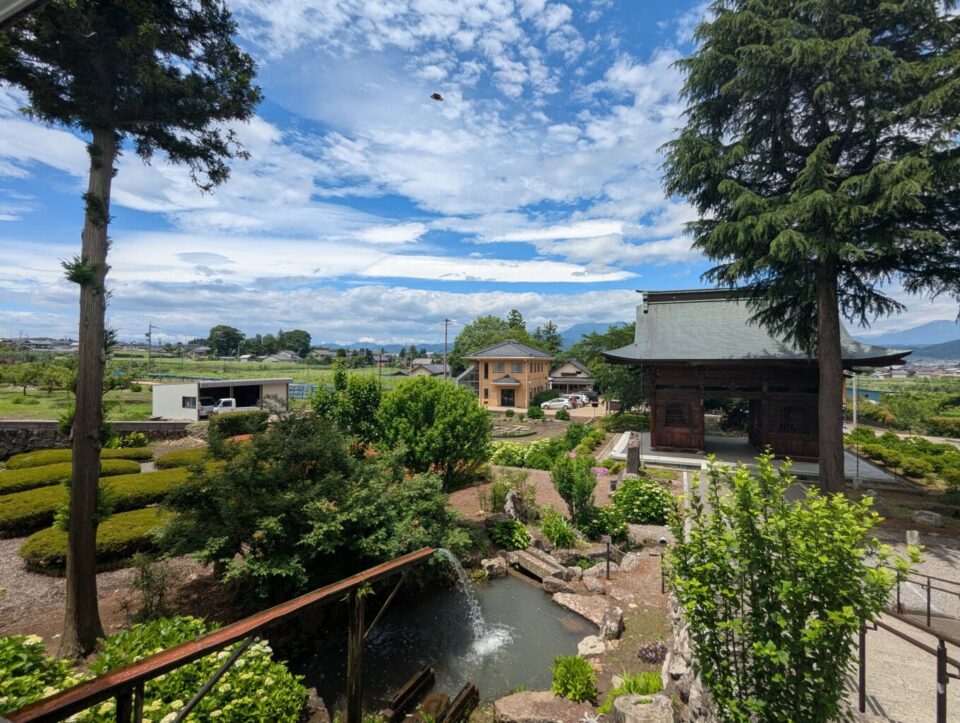
Obuse sits on the Nagano plain with orchards at its edges and low mountains in the distance. Arriving by train, the first impression is scale. The station is small, the streets are narrow, and the main sights are close together. From Nagano Station, the Nagano Electric Railway runs up the valley, making the journey to Obuse worthwhile.
Hokusai’s Invitation to Obuse
Obuse’s name is closely linked with ukiyo-e artist Katsushika Hokusai, but the story here is not only about an artist passing through. It is about the conditions that made late-life work possible. In his mid-80s, Hokusai came to Obuse Village by invitation of Takai Kozan, a wealthy local farmer-merchant and cultural figure. The museum describes how Hokusai produced major works during these visits, including ceiling paintings for local festival floats.
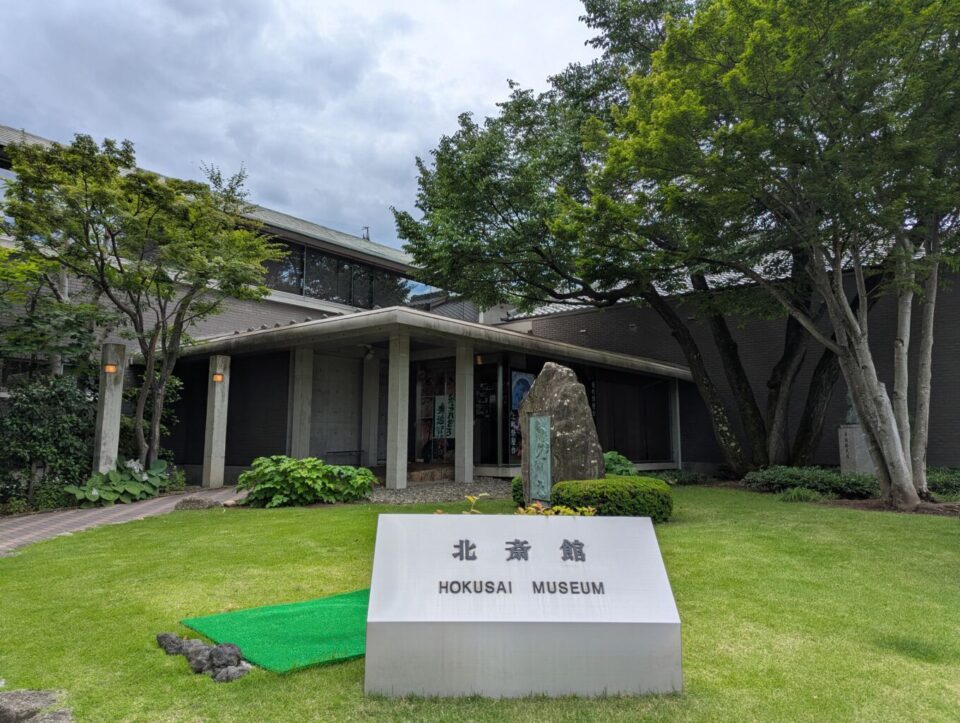
Obuse’s Hokusai connection is in the town itself, not just in the museum. Festival floats were, and still are, community objects, stored, maintained, and brought out for local events. In Obuse, two floats are especially tied to Hokusai’s late work: Higashimachi, with Dragon and Phoenix (painted in 1844 when Hokusai was 85), and Kanmachi, with Masculine Waves and Feminine Waves (painted in 1845 when he was 86). The museum displays floats like these as physical structures, not just as images on a wall. It becomes scale, carpentry, pigment, and neighborhood pride in one object.
A walking town, with history under the surface
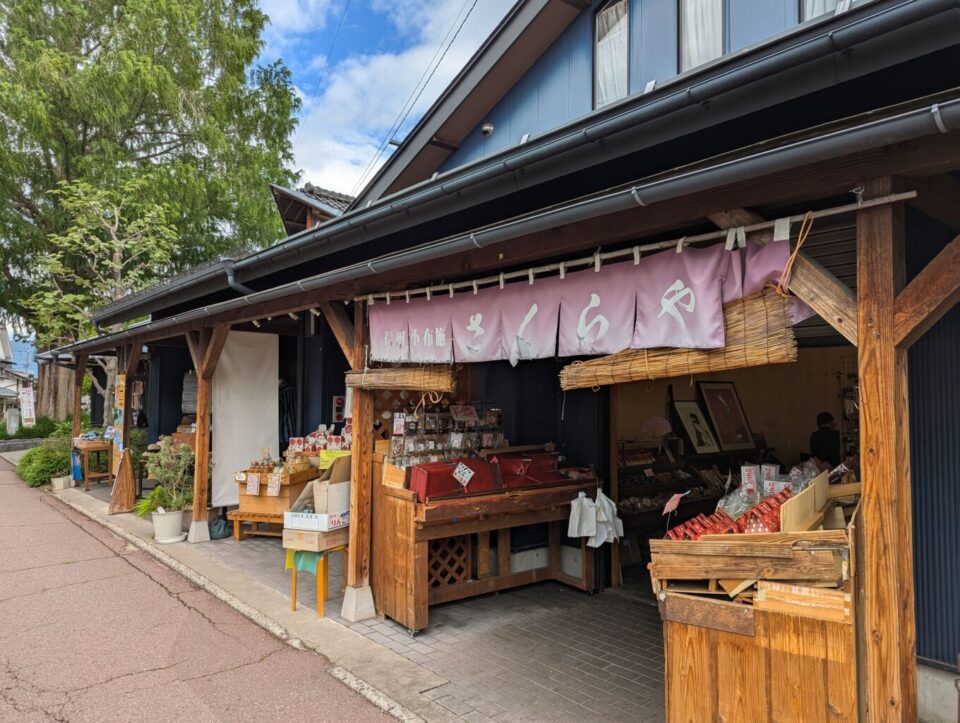
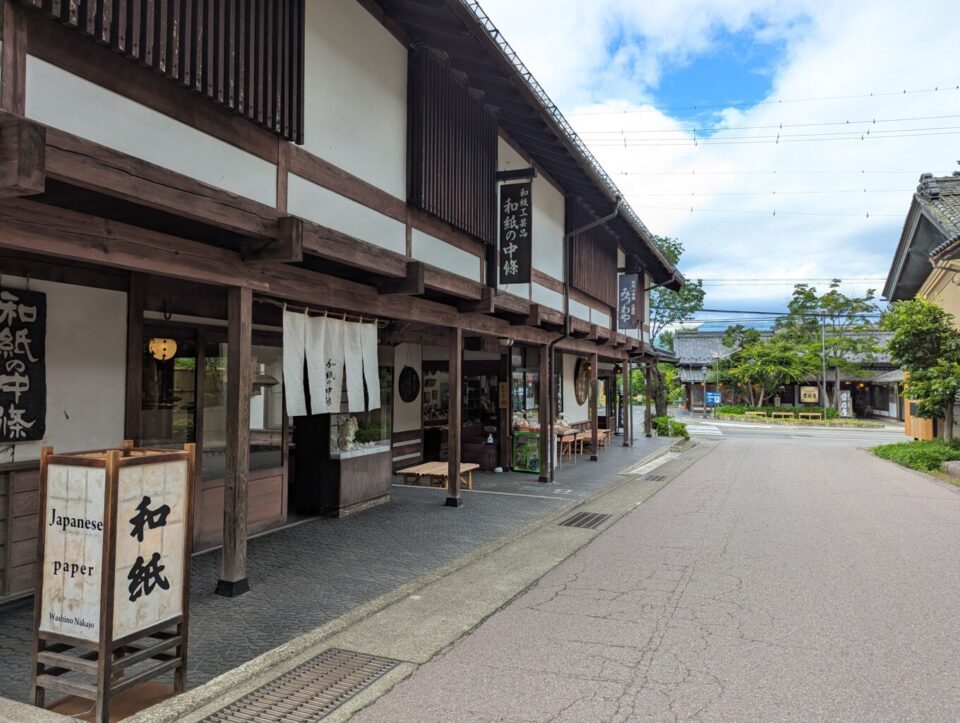
Obuse is compact, and most of the central sights sit within walking distance. On the central streets, it’s the details: white plaster kura storehouses, low wooden facades, small gardens tucked behind walls, and stone-lined lanes that keep visitors’ attention. One of the most popular paths is Kurinokomichi, often translated as Chestnut Alley, a narrow walkway linking major sites in the middle of town. It is not a grand boulevard. It feels like a shortcut that became a feature because people kept using it.
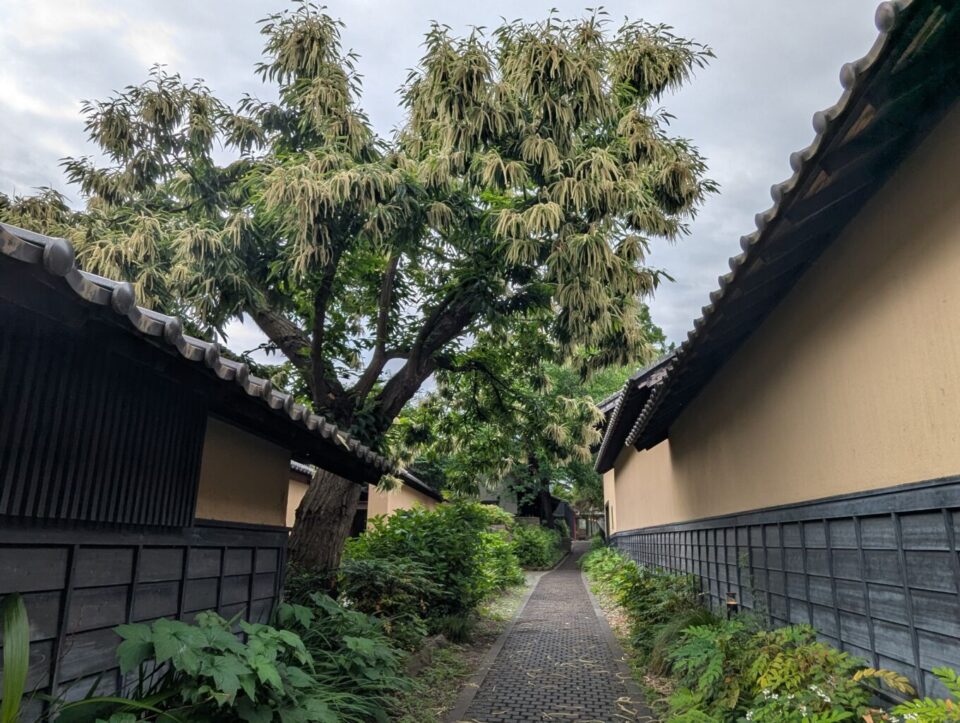
Central Obuse moves between two timelines. One is the Edo-period and late Edo world that produced ukiyo-e, merchant culture, and the networks of patrons and artists. The other is the modern town that decided these pieces of local history should remain visible and accessible, rather than scattered across private homes and storehouses.
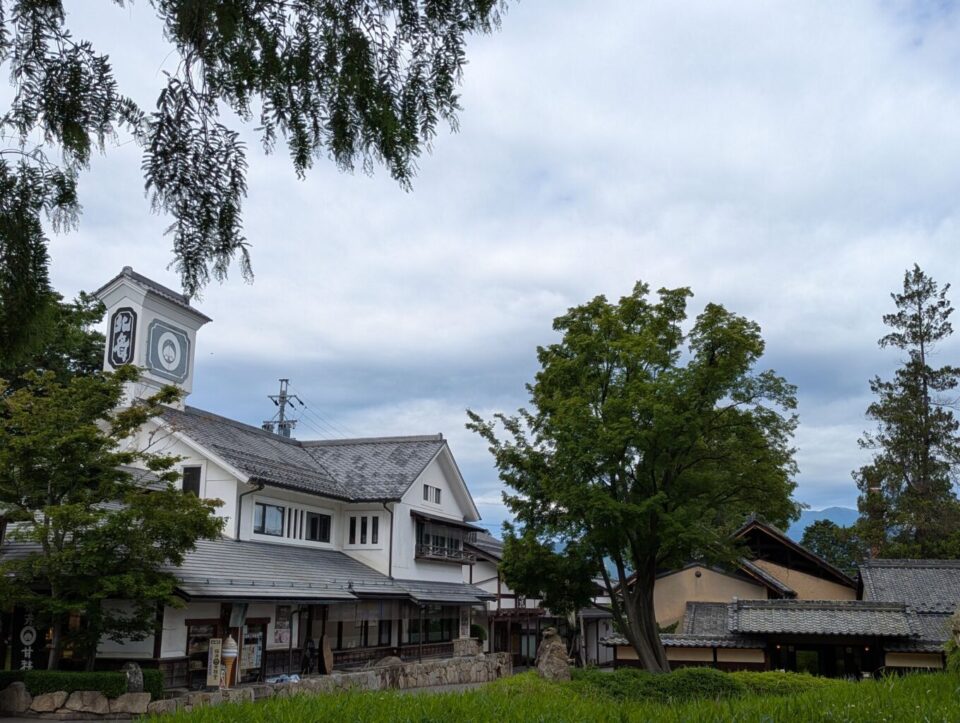
That combination shows up in small, concrete ways. Streets tighten into lanes, then open into pocket courtyards. A shopfront might look contemporary until a side wall reveals thick plaster and heavy wooden doors typical of storehouses. There are also plenty of chestnut cues, from sweets to signage, since Obuse has long traded on its chestnut reputation. The food culture is not separate from the town’s identity. It is part of how a small place stays economically active while keeping a walkable scale.
Takai Kozan Memorial Museum: patron, artist, and house
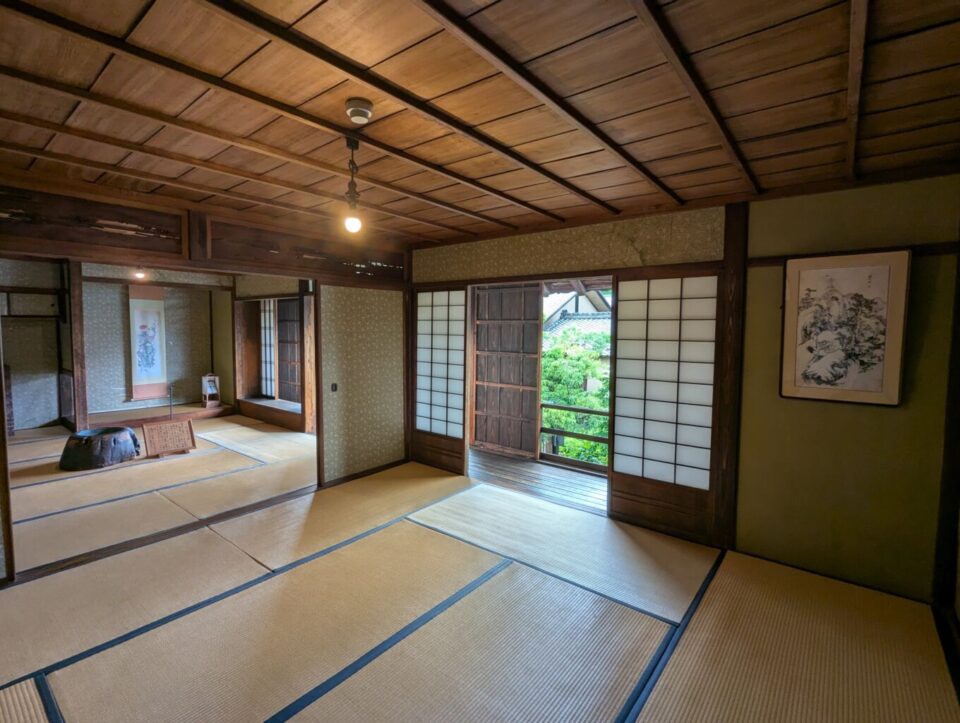
The most direct way to understand how Hokusai ends up here is to spend time with Takai Kozan. The Takai Kozan Memorial Museum preserves buildings associated with him and displays his paintings and calligraphy. It is not only a biography museum. It is also a look at how a prosperous local figure could operate as a cultural node in the late Edo period, collecting art, exchanging ideas, and hosting visitors who were shaping Japan’s visual culture.
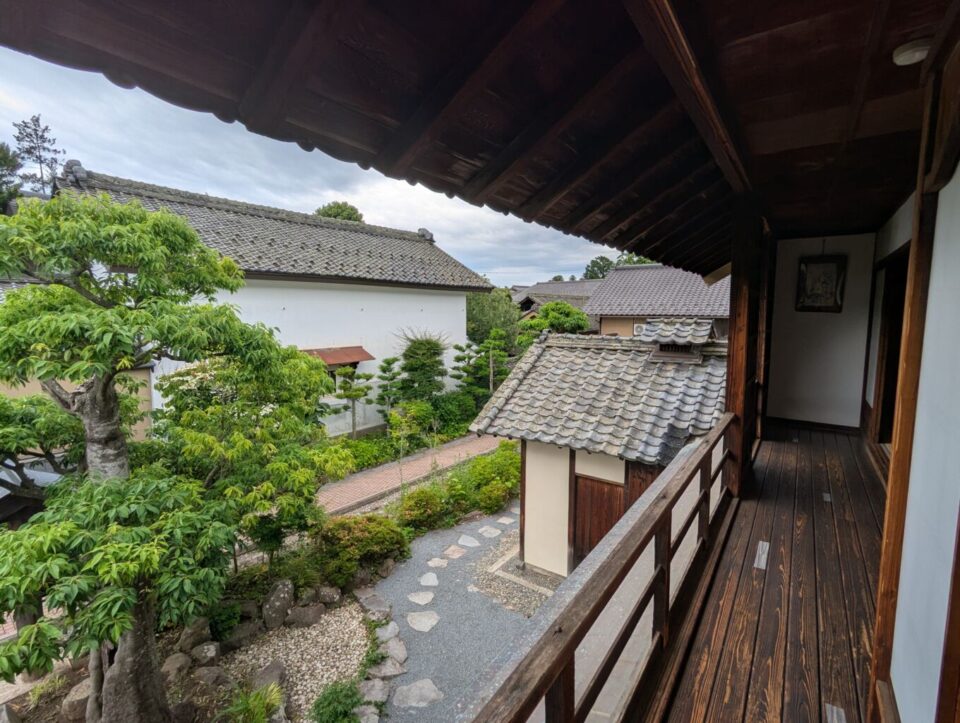
The museum opens at 9:00 and closes at 17:00, with last entry at 16:30. It closes around New Year and occasionally for exhibit changes. The experience is intimate enough that closing time arrives quickly once shoes are off and attention shifts to brushwork and mounted scrolls.
The Hokusai Museum: originals, floats, and late-life work
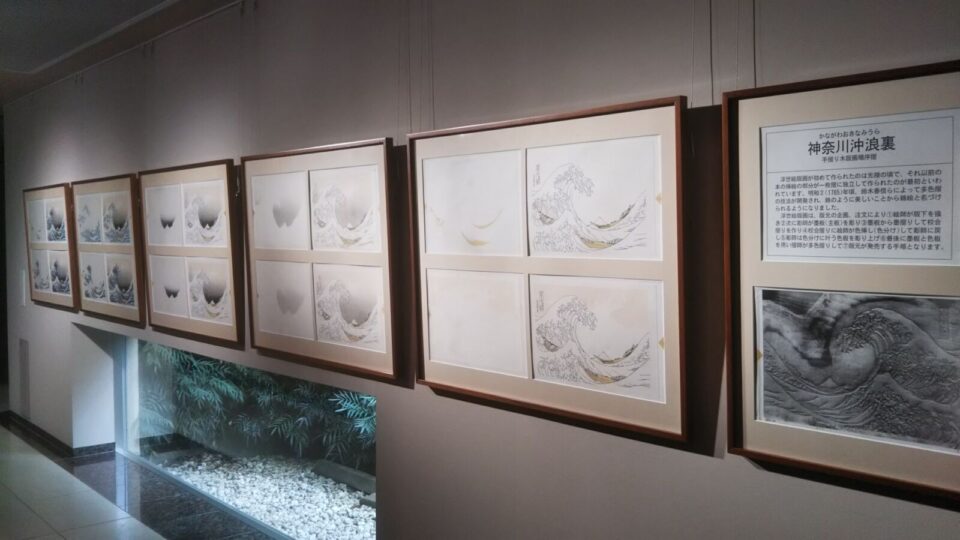
Hokusai-kan, opened in 1976, displays Hokusai’s work across media, including paintings, printed books, and nishiki-e woodblock prints, alongside the large festival float displays that anchor the Obuse story. The museum’s hours are 9:00 to 17:00, with last admission 30 minutes before closing.
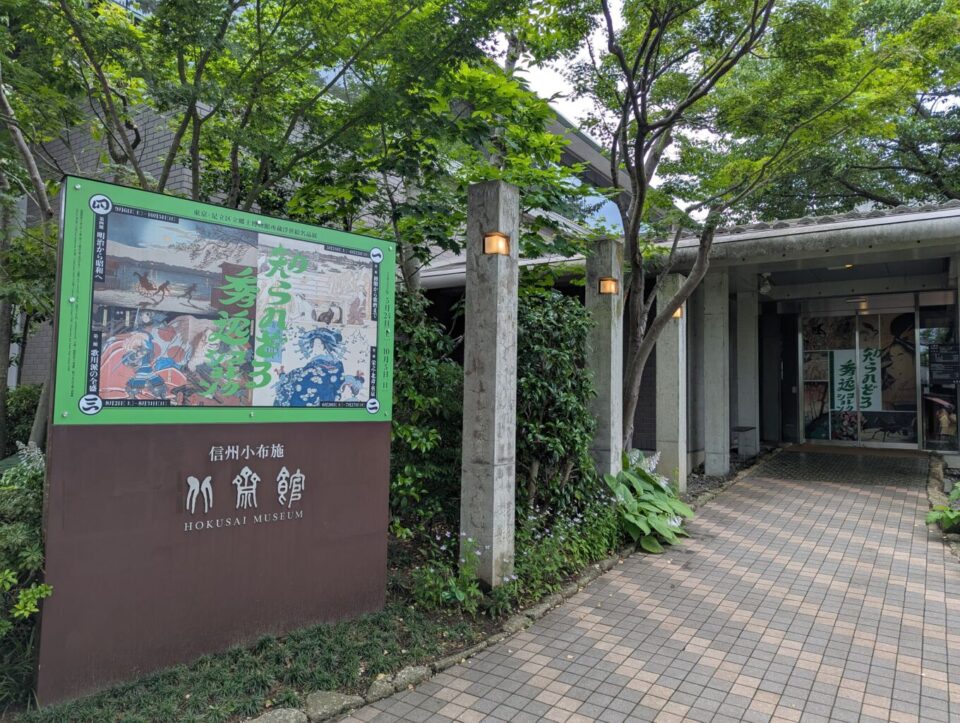
In Obuse, the emphasis is on Hokusai’s later decades. The museum frames the town as a place he returned to in old age, working under different conditions than Edo’s commercial print world, drawing attention to process, patronage, and the physical settings where art was made and displayed.
Gansho-in after the walk
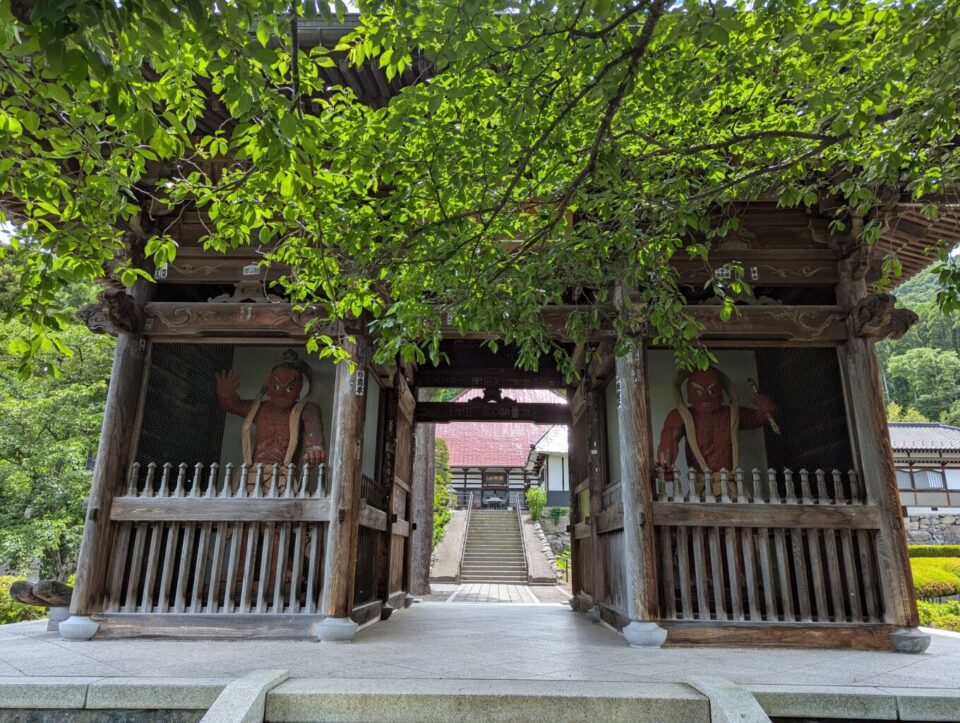
Gansho-in Temple is often mentioned in the wider “Hokusai in Obuse” story because Hokusai painted a phoenix on the temple’s ceiling, but it sits outside the central cluster of sites. It’s about a 30-minute walk from Obuse’s center. After finishing the town center and museums, the walk out is a great way to shift from the tighter streets to the quieter edges of town and open surroundings.
A town built around art and patronage
Obuse's center holds the quiet lanes and chestnut shops, the Kozan museum showing how a wealthy patron shaped local culture, and the Hokusai museum displaying the festival floats painted for town neighborhoods in the artist's final years.
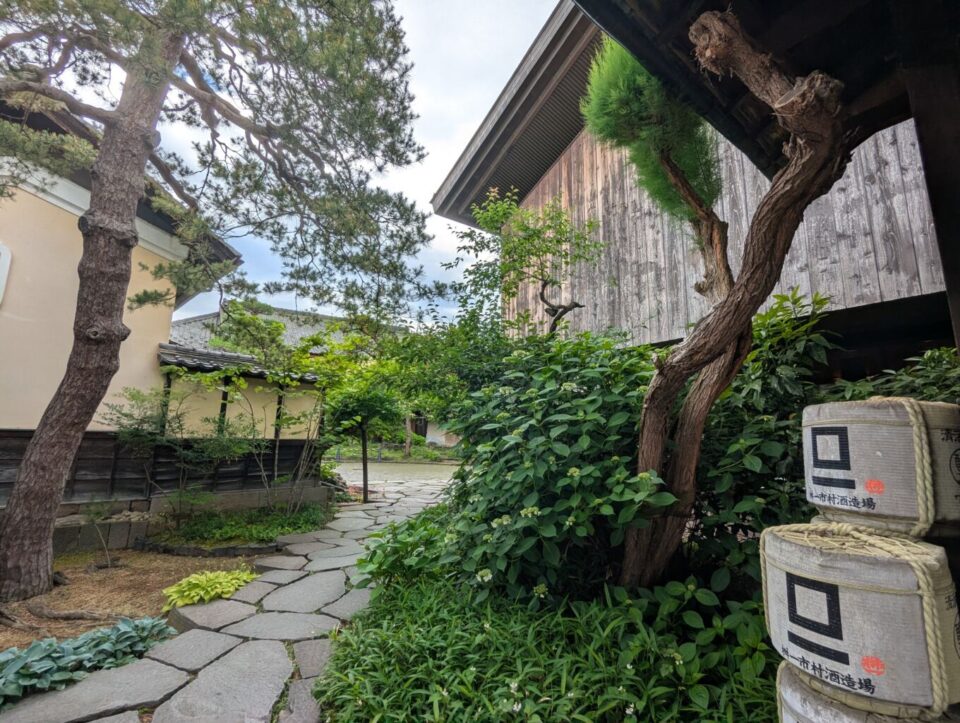
Hokusai's late work here required a patron with resources, relationships that brought him north, and time protected from Edo's commercial pressures. What visitors see now requires different maintenance: buildings kept open as museums, floats stored between festivals, streets that still lead past the same plastered walls and wooden gates.

 Page Top