
Nagano City's Zenkoji Temple and samurai sword training offer a morning of deep cultural immersion into Japan's Buddhist and martial traditions. The 90-minute guided tour covers one of the country's oldest temples, followed by hands-on katana practice at our nearby dojo. For travelers with a full day to spare, the afternoon opens up for a side trip to Jigokudani Monkey Park, where wild Japanese macaques bathe in natural hot springs about 45 minutes north by train from Nagano, followed by a short bus ride and forest walk. Our dojo sits a few minutes from the local station, making it easy to combine both experiences or focus on the temple and samurai training alone.

Zenkoji: Where Buddhism Opened Its Doors
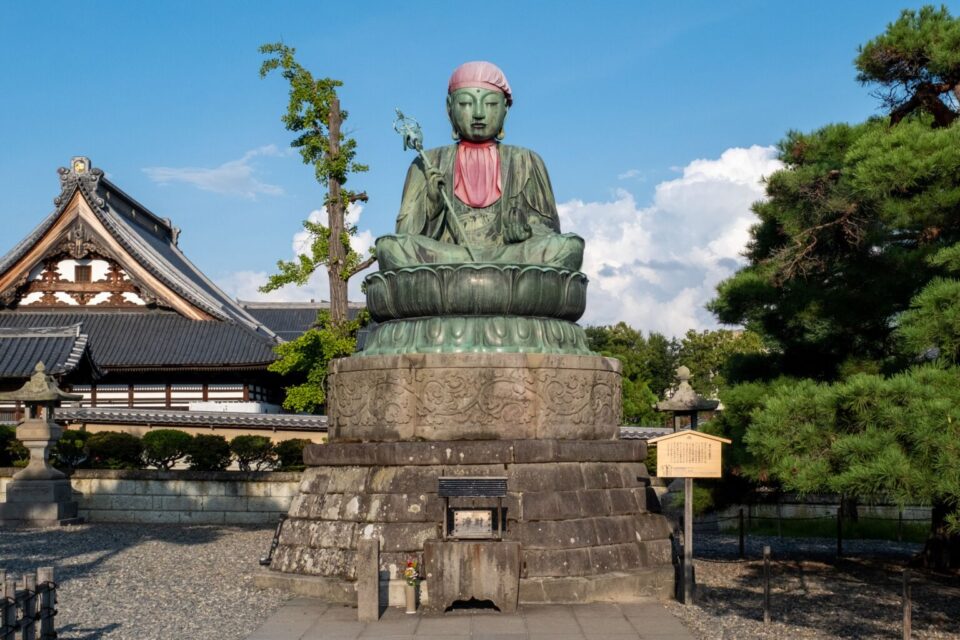
Founded in 642, Zenkoji Temple predates the split of Japanese Buddhism into separate sects, which helps explain its unusual openness. Today it is officially non-sectarian, jointly served by Tendai and Jodo clergy, and it welcomes visitors of any faith. Historically, unlike temples tied to specific sects or social classes, it accepted all believers during the Edo period, including women pilgrims at a time when many other sacred sites barred them. That tradition continues today, with both a high priest and a high priestess sharing leadership.

Our 90-minute guided tour walks you through details that independent visitors often miss. Your guide explains the temple’s history, the symbolism woven through the grounds, and the small rituals that have continued for centuries. The main hall, rebuilt in 1707, stands as a National Treasure and houses what tradition holds is the first Buddhist statue brought to Japan, kept hidden from public view since 654. You’ll see how pilgrims interact with the temple through gestures passed down across generations, and discover elements that most visitors walk right past.
Samurai Training at the Dojo
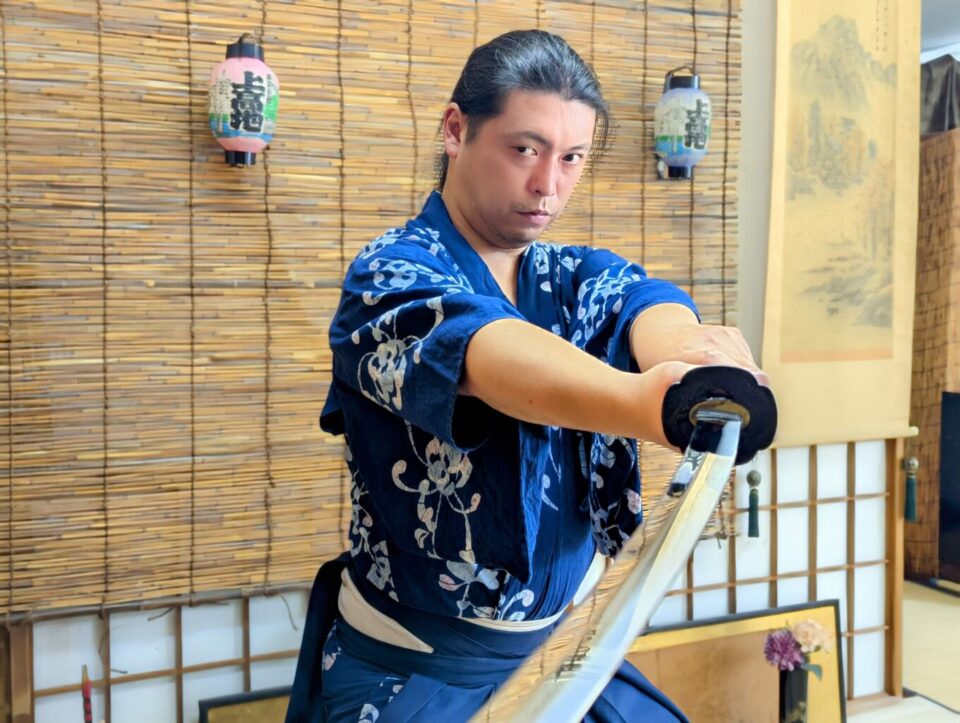
After Zenkoji, the tour moves to our Nagano dojo for samurai sword training. The session introduces the fundamentals of handling a katana under the guidance of an experienced instructor. You learn proper grip, stance, and the techniques underlying each movement. The weight of the sword surprises most first-timers. It's lighter than expected, but demands precision rather than strength.
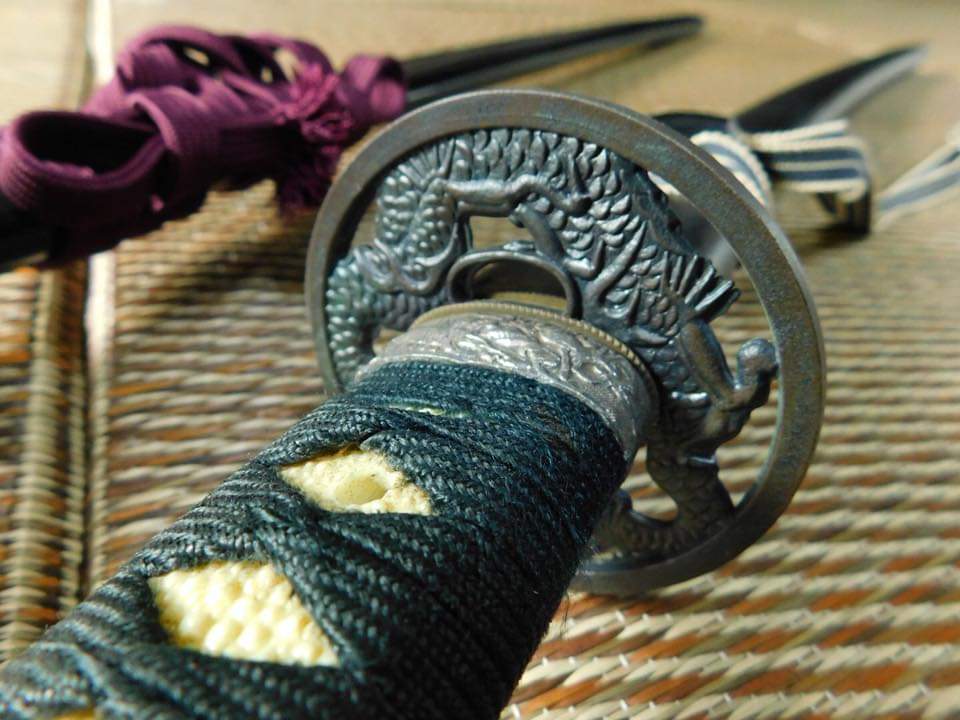
The practice connects physical technique with the mental discipline that shaped samurai culture. Your instructor demonstrates how each cut begins and ends with awareness, not force. The movements feel deliberate and measured, breaking down centuries of martial tradition into steps you can follow. It's a tactile understanding of Japan's martial traditions that goes beyond museum displays or historical accounts. By the end of the session, the basic forms start to make sense, and you get a glimpse of why samurai training took years to master.
The Train to Yudanaka (Snow Monkey Park)
From our dojo near Zenkojishita Station, the afternoon opens for independent travel to Jigokudani Monkey Park. It is a short walk to the Nagano Dentetsu platforms at Zenkojishita. Trains on the Nagano Dentetsu Line run from Nagano Station via Zenkojishita to Yudanaka Station, the nearest rail stop to the park. Express trains reach Yudanaka in about 45 minutes from Nagano, followed by a short bus ride and forest walk.
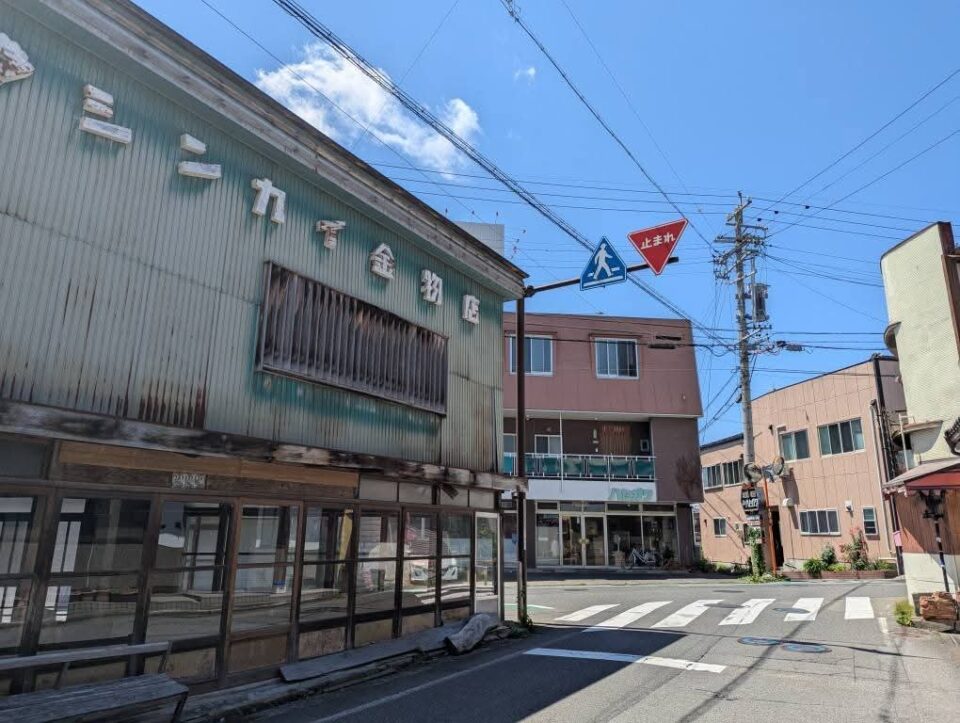
Local buses depart from directly outside Yudanaka Station, reaching the Snow Monkey Park bus stop at Kanbayashi Onsen in about 10 minutes. The shuttle drops you at the lower edge of Kanbayashi, a small hot spring village. From there, a forest road leads uphill through the village for about seven to ten minutes to the trail entrance. The main trail to the monkey park then follows the Yokoyu River through cedar forest for roughly 30 to 40 minutes.
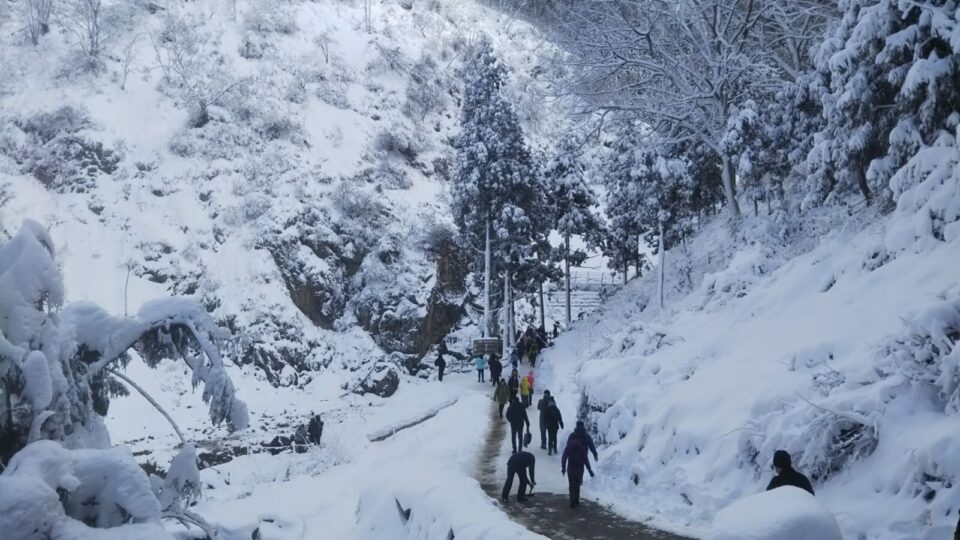
The path stays passable year-round, though winter conditions require attention. Snow and ice make the trail slippery, and sturdy winter footwear with good grip becomes essential. Crampons are available for rent or purchase at the trailhead if conditions warrant.
Jigokudani: Where Monkeys Bathe
Jigokudani translates as Hell Valley, named for the volcanic activity that heats the springs and sends steam rising through the rocky terrain. The valley lies deep in the mountains of Yamanouchi, under heavy snow for a third of the year. Japanese macaques, the world’s northernmost non-human primates, have adapted to these harsh conditions. The troupe that visits the park numbers over 200 individuals living in the surrounding forests. The monkeys come and go freely, spending their days in the mountains and returning to the park to bathe and socialize. Their behavior follows natural patterns rather than performance schedules.
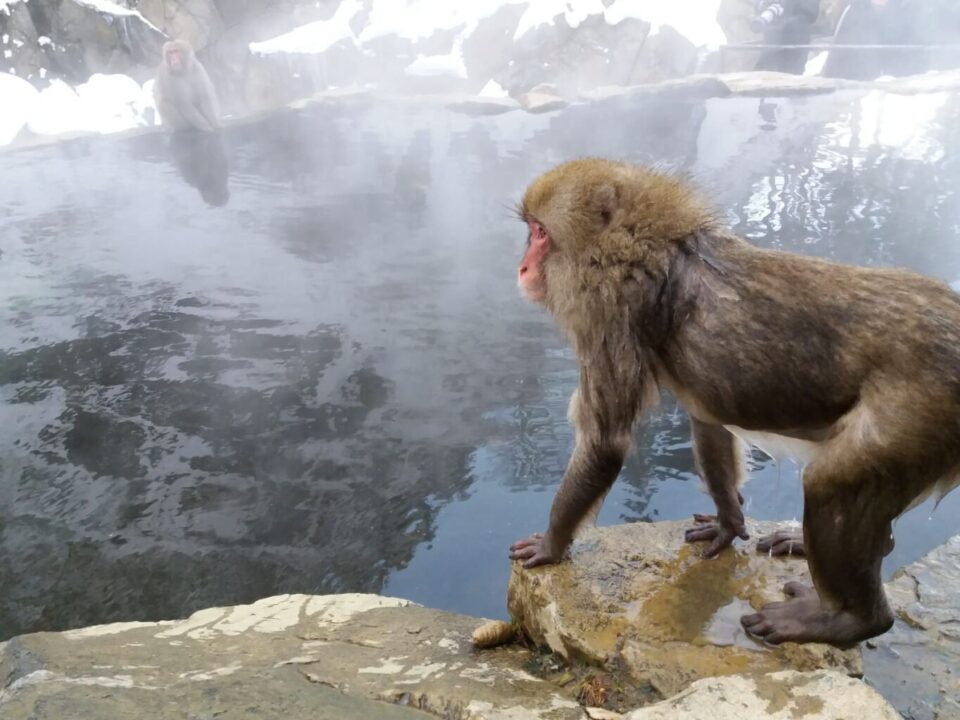
Winter delivers the most reliable viewing, particularly December through February when snow blankets the valley and the monkeys seek warmth in the hot springs. The sight of snow-dusted macaques soaking in steaming water, seemingly unconcerned by human observers, has made them internationally famous. You can watch their social dynamics up close: youngsters splashing at the pool’s edge, mothers tending infants, the alpha male overseeing the troupe. The monkeys tolerate photographers, but they maintain their own routines. Park rules prohibit touching, feeding, or staring directly at them, since prolonged eye contact registers as aggression in their social code.
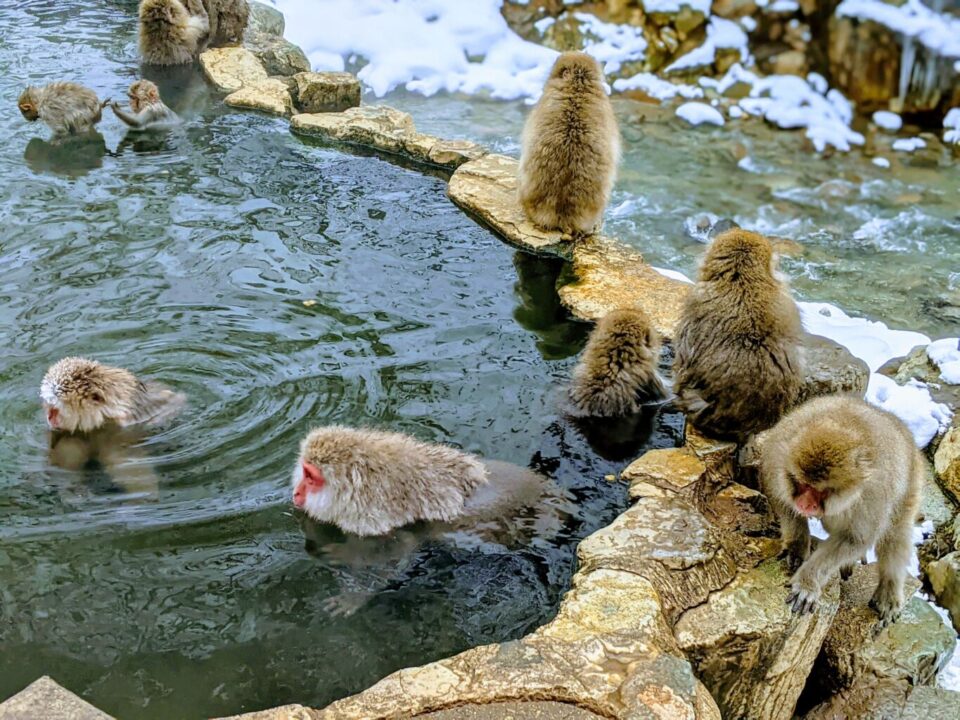
In winter, the park is generally open from 9:00 AM to 4:00 PM, with last entry at 3:30 PM, and admission currently costs 800 yen for adults. Hours, prices, and conditions can change, and even in winter the monkeys may not appear every day, though visits remain frequent during cold months. The park’s official website and social media provide up-to-date information before you travel.
Returning to Nagano
The same shuttle bus returns you from Kanbayashi Onsen to Yudanaka Station in the late afternoon, connecting with express trains back to Nagano. You will reach Nagano Station by early evening, with the area’s restaurants and izakayas open for dinner.
Book your day with us!
This itinerary works because of proximity and contrast. The morning’s cultural immersion at Zenkoji and the dojo benefits from a guide who can unpack history, symbolism, and technique. The afternoon’s wildlife encounter works best as self-directed exploration, letting you walk the forest trail at your own pace and spend as long as you like watching the monkeys. We feel this combination shows Nagano at its best in a single day.
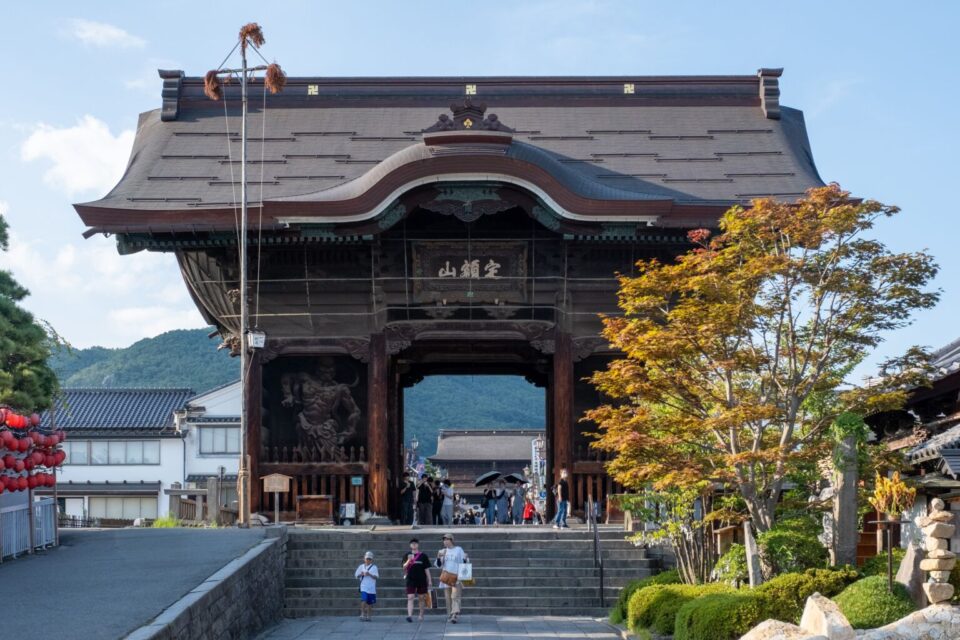
If this sounds like your kind of day, start with our Zenkoji Temple and Samurai Sword Experience in the morning, then spend your afternoon around the snow monkeys. Learn more about the tour and plan your time in Nagano City.
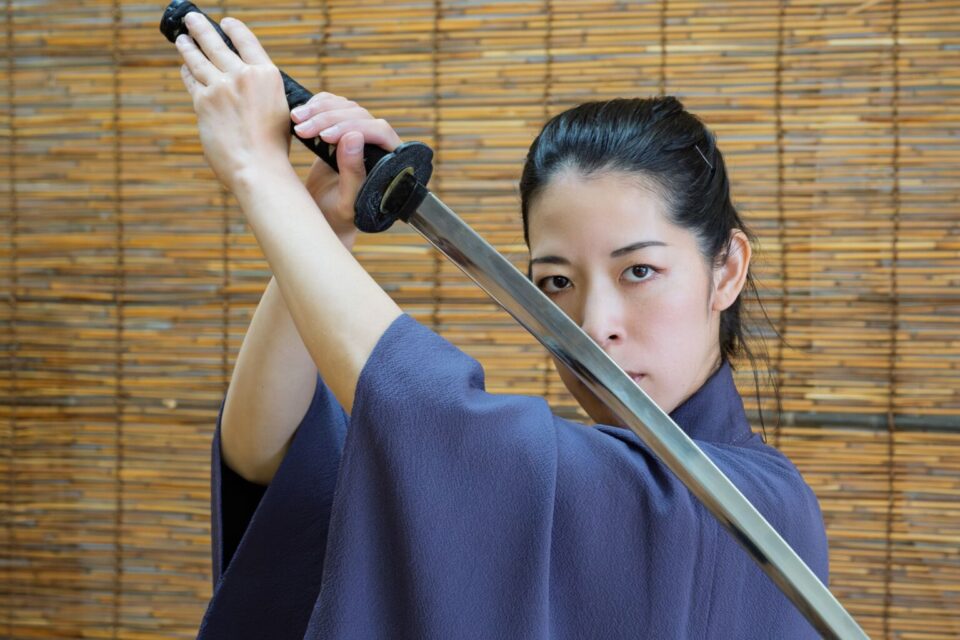
BOOK NOW
Practical Info
Trains and Buses
For current train and bus times, it is best to check official timetables shortly before you travel. You can use the Nagano Dentetsu (Nagaden) timetable or an English route search for local trains and buses. (Timetables are subject to change.)
Most travelers on the Nagano Dentetsu Line will use the limited express services. Two types of train run in rotation through the day, and some services require a transfer to another train. Please check the timetable carefully or ask station staff if you are unsure. You usually do not need reservations for these trains or buses, but confirming times on the day makes it easier to match your return from the monkeys with your evening plans in Nagano.
When riding a limited express train, remember to buy an additional express ticket as well as your regular fare ticket.
- Nagaden train and bus timetable (seasonal PDF)
- Nagaden train route search: Zenkojishita to Yudanaka (Navitime)
Station information
Snow Monkey Park hours and conditions
For park opening hours, entrance fees, and recent monkey activity, check the official Jigokudani Yaen-Koen website or its social media feeds before your visit.

 Page Top